If you’ve ever thought “why does this seem so confusing?” — you’re not alone. This guide breaks it down visually so it finally makes sense.

NEW 2026 FAR
Private Pilot Cheat Sheet

Pass Your Checkride with Ease! – Summarizes 70+ FAR’s

Quick Study Guide NOW 100% WATERPROOF AVAILABLE!

Density Altitude & Pressure Altitude Cheat Sheet
(Free Download for Student Pilots)

Understanding pressure altitude and density altitude is one of the most important concepts for pilots preparing for a Private Pilot checkride. These topics appear in FAA written exams, oral exams, and real-world flight planning.

To make it easier, we created a free pilot cheat sheet and explainer video that simplifies everything:

Free Download: Pressure & Density Altitude Cheat Sheet

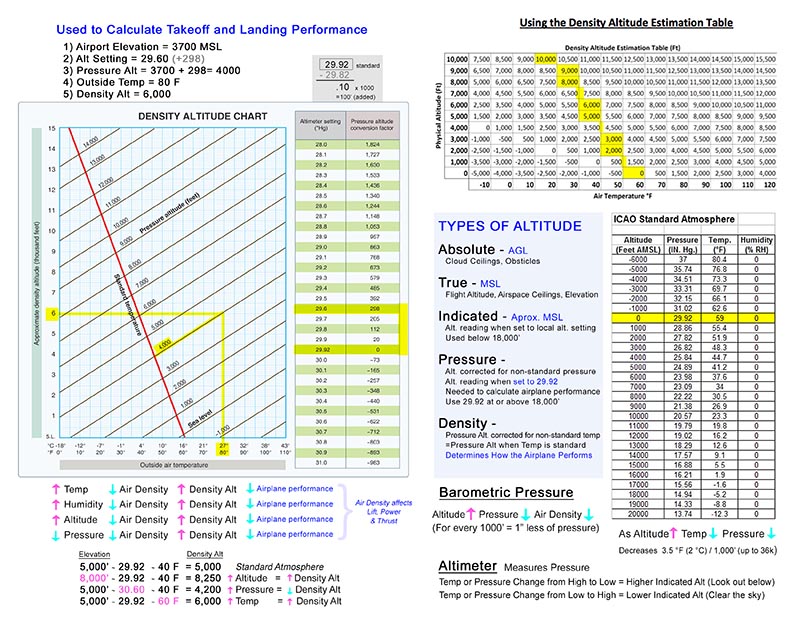
Download the pilot-friendly cheat sheet that summarizes the key formulas, definitions, and performance concepts you need to remember for your Private Pilot oral exam and checkride. Inside the cheat sheet you’ll learn:

  • The difference between indicated, pressure, density, and true altitude
  • How temperature and humidity change air density
  • Why high density altitude reduces aircraft performance
  • The standard atmosphere values every pilot should memorize
  • A simple framework to remember everything quickly during your checkride

Perfect for:

  • Student pilots
  • Private pilot checkride prep
  • Ground school study
  • Quick cockpit reference

Watch: Pressure Altitude & Density Altitude Explained

This video walks through the concepts visually and explains why density altitude is one of the biggest performance killers in aviation.

What Is Pressure Altitude?

Pressure altitude is the altitude measured relative to the standard pressure datum plane (29.92 inHg).  Pressure altitude is what your altimeter reads when it is set to 29.92 inches of mercury.

Pilots use pressure altitude as the baseline for aircraft performance calculations, including:

  • Takeoff distance
  • Climb performance
  • Cruise performance
  • Landing distance

Aircraft performance charts are all built using pressure altitude as the starting reference.

What Is Density Altitude?

Density altitude is Pressure altitude corrected for non-standard temperature (and slightly humidity). It represents the altitude the airplane “feels like” it’s flying at due to air density.

When density altitude increases:

  • Air becomes less dense
  • Wings produce less lift
  • Propellers produce less thrust
  • Engines produce less power

As density altitude increases, aircraft performance decreases. This is why hot, high, and humid conditions can be dangerous for pilots.

The Three Factors That Increase Density Altitude

Pilots often remember the 3 H’s:

1. High Temperature

Warm air expands and spreads molecules apart, making air less dense. Result:

  • Less lift
  • Longer takeoff roll
  • Reduced climb rate

2. High Altitude

Atmospheric pressure decreases with altitude, which reduces air density. Result:

  • Lower engine power
  • Reduced propeller efficiency

3. High Humidity

Water vapor is less dense than dry air, so humidity lowers air density slightly.

Humidity has the smallest effect, but it still contributes to higher density altitude.

Standard Atmosphere (ISA) — What Pilots Must Know

Aviation uses a standardized model called the International Standard Atmosphere (ISA) so aircraft performance calculations remain consistent worldwide. These values create the reference atmosphere used to calibrate altimeters and aircraft performance charts. Standard sea level conditions are:

Standard Value Measurement
Pressure 29.92 inHg (1013.25 hPa)
Temperature 15°C (59°F)
Density 1.225 kg/m³

NEW 2026 FAR
Private Pilot Cheat Sheet

Pass Your Checkride with Ease! – Summarizes 70+ FAR’s

Quick Study Guide NOW 100% WATERPROOF AVAILABLE!

Types of Altitude Every Pilot Should Know

Student pilots often memorize these for the Private Pilot oral exam.